
Adjustable retail shelving creates a practical electrical challenge: shelves need consistent lighting while their heights and positions may change between store layouts. A shelf power track system can help distribute low-voltage power through a compatible fixture structure, reducing the need to route a separate exposed cable to every shelf. This guide explains what retail fixture manufacturers and shopfitting teams should verify before specifying a system.
When is a shelf power track useful?
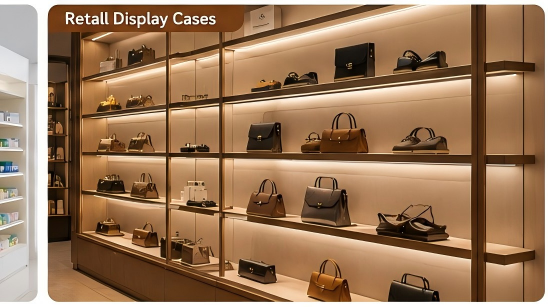
A power track is worth evaluating when a display has multiple illuminated shelf levels, when shelves must be repositioned, or when visible wiring would interfere with the intended presentation. Typical projects include supermarket gondola displays, branded retail fixtures, pharmacy shelving and custom point-of-sale displays. It is not automatically the best option for every installation: fixed shelves with accessible cable routes may be adequately served by conventional low-voltage wiring.
Compare three integration approaches
1. Built-in power track integrated with the upright
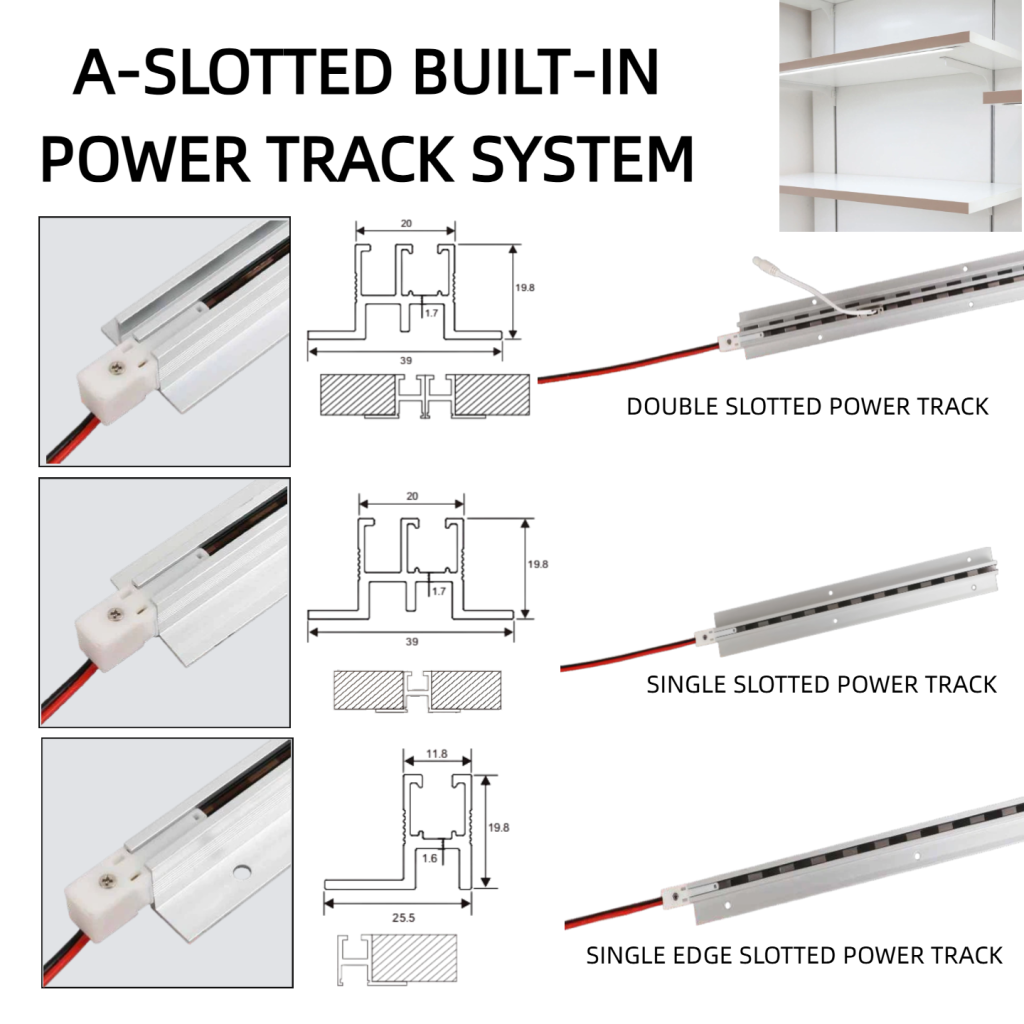
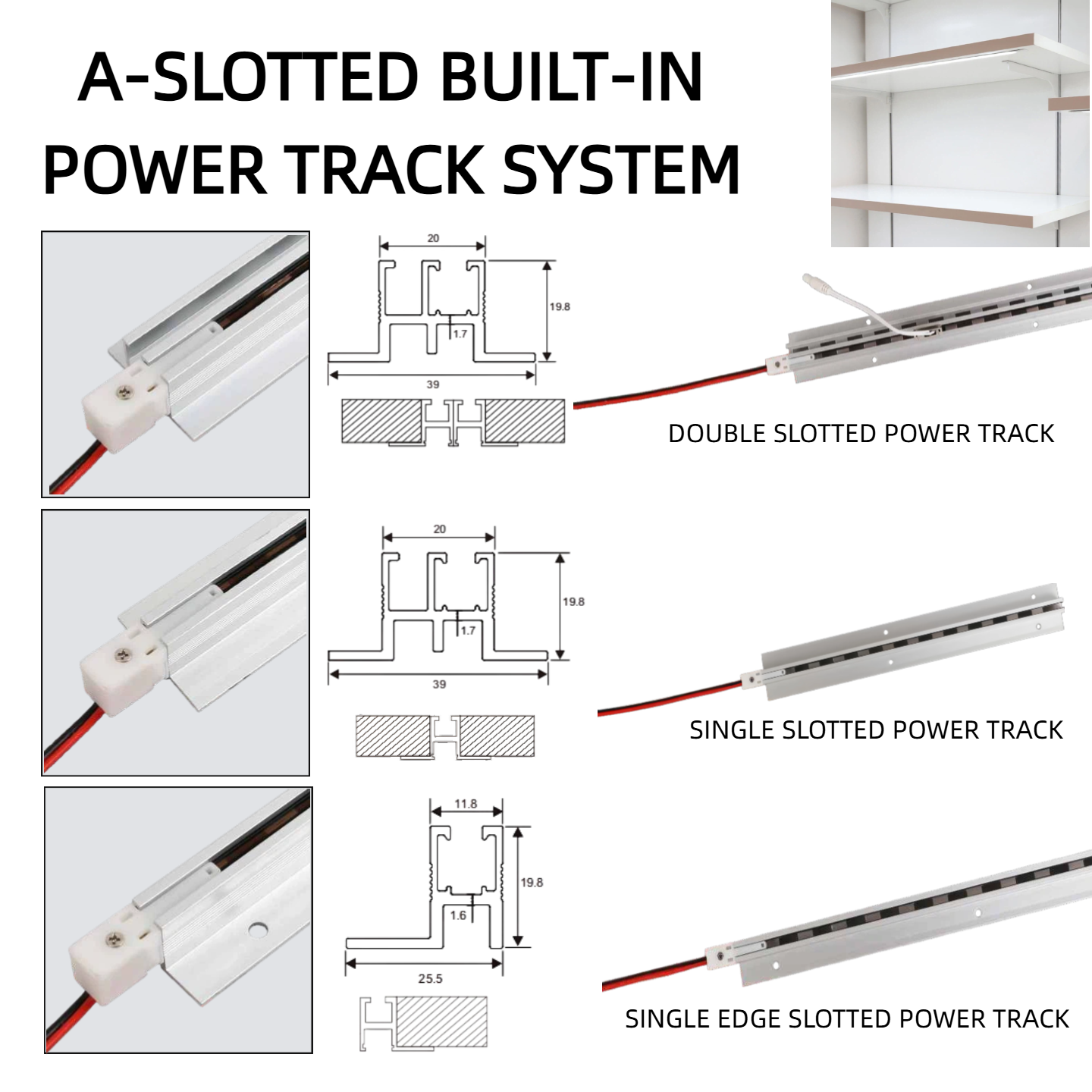
An upright-integrated design is considered when the metal fixture structure and power distribution need to work as one system. Confirm upright profile dimensions, bracket and connector fit, shelf adjustment positions, finish requirements and the assembly sequence. For an existing shelving design, a dimensioned drawing or physical upright sample is important before tooling or batch production.
2. Embedded power track in a dedicated channel
An embedded channel may be appropriate for custom metal or wood fixture construction where the power path can be planned into the cabinet or shelving structure. Check channel dimensions, mounting clearances, insulation and access for servicing. The fixture and electrical design should be reviewed together rather than independently.
3. Magnetic or surface-mounted power track
For certain retrofit or modular applications, a compatible magnetic or surface-mounted track can offer a different installation route. Suitability depends on the substrate, retention method, connector geometry and protection against accidental disconnection. Do not assume that components from different power track families are interchangeable.
Technical checklist before selecting components
- Fixture drawings: upright cross-section, slot spacing, shelf bracket details and intended mounting position.
- Electrical design: rated input and output voltage, power supply location, total connected load and required electrical protection.
- Connector compatibility: contact position, mechanical fit, insertion direction and cable termination.
- Shelf lighting: number of LED bars, length per shelf, light distribution and diffuser choice.
- Movement: expected frequency of shelf height adjustment and protection of live connections during normal use.
- Environment: temperature, moisture, cleaning practices and any applicable project-specific compliance requirements.
- Serviceability: access for replacement of power supplies, connectors and light bars.
Common specification mistakes
One frequent mistake is choosing a track based only on its visible width without checking the full upright and connector interface. Another is specifying lighting for one shelf without calculating the total system load. A third is overlooking how the installer will route power into the upright or cabinet. These issues are easier to resolve at drawing and sample stage than after fixture fabrication.
Recommended project evaluation process
- Share the shelving layout and upright or cabinet cross-section.
- Identify which shelves require lighting and whether their positions will change.
- Confirm the intended LED light bars, supply voltage and total load.
- Review track and connector compatibility with the fixture manufacturer.
- Test a representative assembled sample before finalizing the production configuration.
Related UnioneLED systems
Explore the Shelf Power Track System, the A-Slotted Built-In Power Track System and LED Shelf Lighting Systems. For a project-specific configuration, send UnioneLED your fixture drawings or shelf photos so the mounting and power distribution approach can be reviewed against the actual design.
Related technical guide
Read the LED Shelf Lighting Selection Guide for additional fixture design guidance.
Pingback: How to Choose LED Shelf Lighting for Gondola and Retail Display Fixtures - UnioneLED